Pricing phone repairs by simply matching the shop down the street is one of the most common ways repair businesses quietly lose money. A competitor's price tells you nothing about their parts supplier, their technician speed, or whether they are covering their rent. To price repairs correctly, you need a repeatable formula: start with your true cost (parts, labor, overhead, and a warranty buffer), add the margin you need to stay profitable, and only then check that number against the local market. If your price is far above competitors, audit your costs before cutting your rate — the problem is usually inefficiency, not greed.
The Core Pricing Formula
Every repair ticket carries four distinct cost components, whether you are replacing a screen, a battery, or a charging port. Your selling price has to cover all four before you add any profit:
Break-even Price = Parts Cost + Labor + Overhead Allocation + Warranty Buffer
Once you know your break-even point, add your target margin to arrive at a retail price. This order matters. Shops that start with "what will the market pay" and work backward tend to absorb cost increases silently until margins disappear. Shops that start with their own numbers notice immediately when a part price rises or a repair is taking longer than expected.
Breaking Down Your Costs
1. Landed Parts Cost
Never use the sticker price on a supplier's website as your parts cost. Your landed cost needs to include shipping, payment processing fees, and a portion of the cost of defective units that cannot be returned or credited. If you buy screens or batteries in bulk, divide the full invoice total by the number of units you actually expect to use successfully, not the number ordered.
2. Labor Time and Rate
Labor is the component shops most often undercharge. Your hourly labor rate should not just cover a technician's wage; it needs to contribute to rent, insurance, tools, software, and non-billable time spent on intake, diagnostics, and customer calls. If you track ticket history in repair-ticket-software, you can compare the time a repair is quoted to take against how long it actually takes, and adjust your labor bands when a repair type consistently runs long.
3. Overhead and Warranty Buffer
Every shop carries fixed costs — utilities, rent, software subscriptions, insurance — that have to be spread across repair tickets rather than tracked individually. Allocate a small, consistent overhead amount to every job. Add a warranty buffer on top of that: even careful technicians occasionally receive a defective replacement part or encounter hidden liquid damage. A 5–10% buffer protects your margin when a job needs a second look or a part needs to be replaced under warranty.
Competitive Positioning Without Racing to the Bottom
Once you know your break-even price, competitive research becomes useful rather than dangerous. Check what nearby shops charge for the same repair, but treat that number as context, not as your target. If your break-even price is close to or below the market rate, you have room to compete on price or speed. If your break-even price is meaningfully above the market, you have three real options: improve technician efficiency so labor cost per ticket drops, find a better parts supplier to lower landed cost, or position the repair as a premium service with a stated warranty length, faster turnaround, or OEM-grade parts that justify the higher price. Dropping your price to match a competitor without knowing their cost structure is a common way shops end up busy and unprofitable at the same time.
Hypothetical Pricing Examples
The numbers below are illustrative only. Replace them with your own shop's parts costs, labor rate, and overhead to get a figure that actually reflects your business.
Example A: Standard Screen Replacement
- Landed Parts Cost: $50
- Labor (40 minutes at $60/hr): $40
- Overhead Allocation: $10
- Warranty Buffer: $5
- Break-even Price: $105
- Profit Margin (30%): $31.50
- Final Retail Price: $136.50
Example B: Battery Replacement
- Landed Parts Cost: $20
- Labor (20 minutes at $60/hr): $20
- Overhead Allocation: $10
- Warranty Buffer: $5
- Break-even Price: $55
- Profit Margin (30%): $16.50
- Final Retail Price: $71.50
Example C: Charging Port Repair
Charging port repairs often take longer than a battery swap because of the finer soldering or connector work involved, even though the part itself is inexpensive.
- Landed Parts Cost: $8
- Labor (50 minutes at $60/hr): $50
- Overhead Allocation: $10
- Warranty Buffer: $5
- Break-even Price: $73
- Profit Margin (30%): $21.90
- Final Retail Price: $94.90
Notice that the charging port repair has the cheapest part but is priced close to a screen replacement, because labor time — not parts cost — is driving the total. Shops that price primarily off the part cost tend to underprice exactly this kind of repair.
Managing Workflow and Profitability
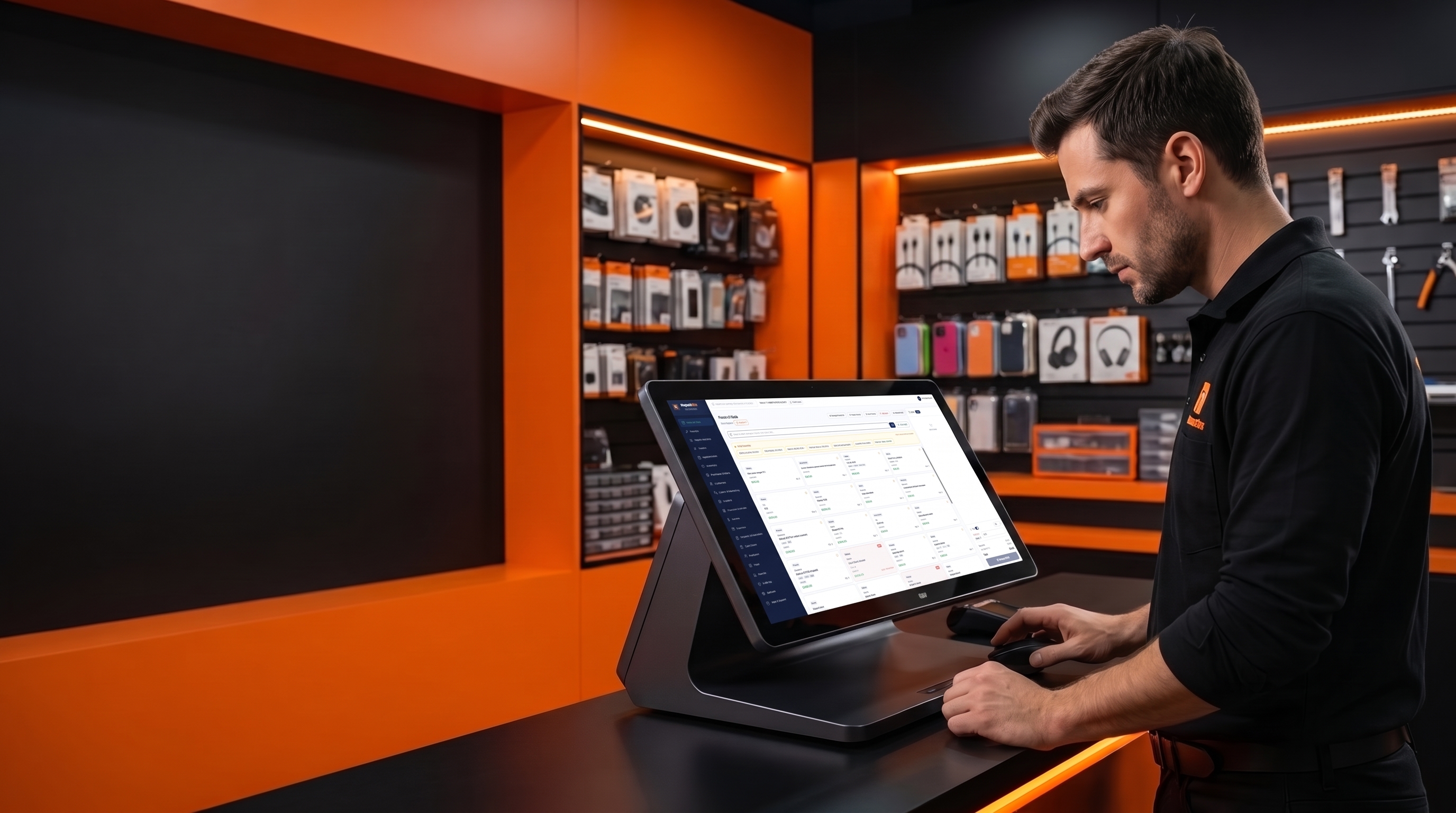
Consistency protects margin as much as the formula itself. When every staff member quotes from a standardized price list in repair-shop-pos rather than estimating on the spot, you avoid the quiet discounting that erodes profit over a busy week. During intake, recording device condition and IMEI with imei-tracking-software also reduces disputes over pre-existing damage, which otherwise turn into unplanned warranty work that was never priced into the ticket.
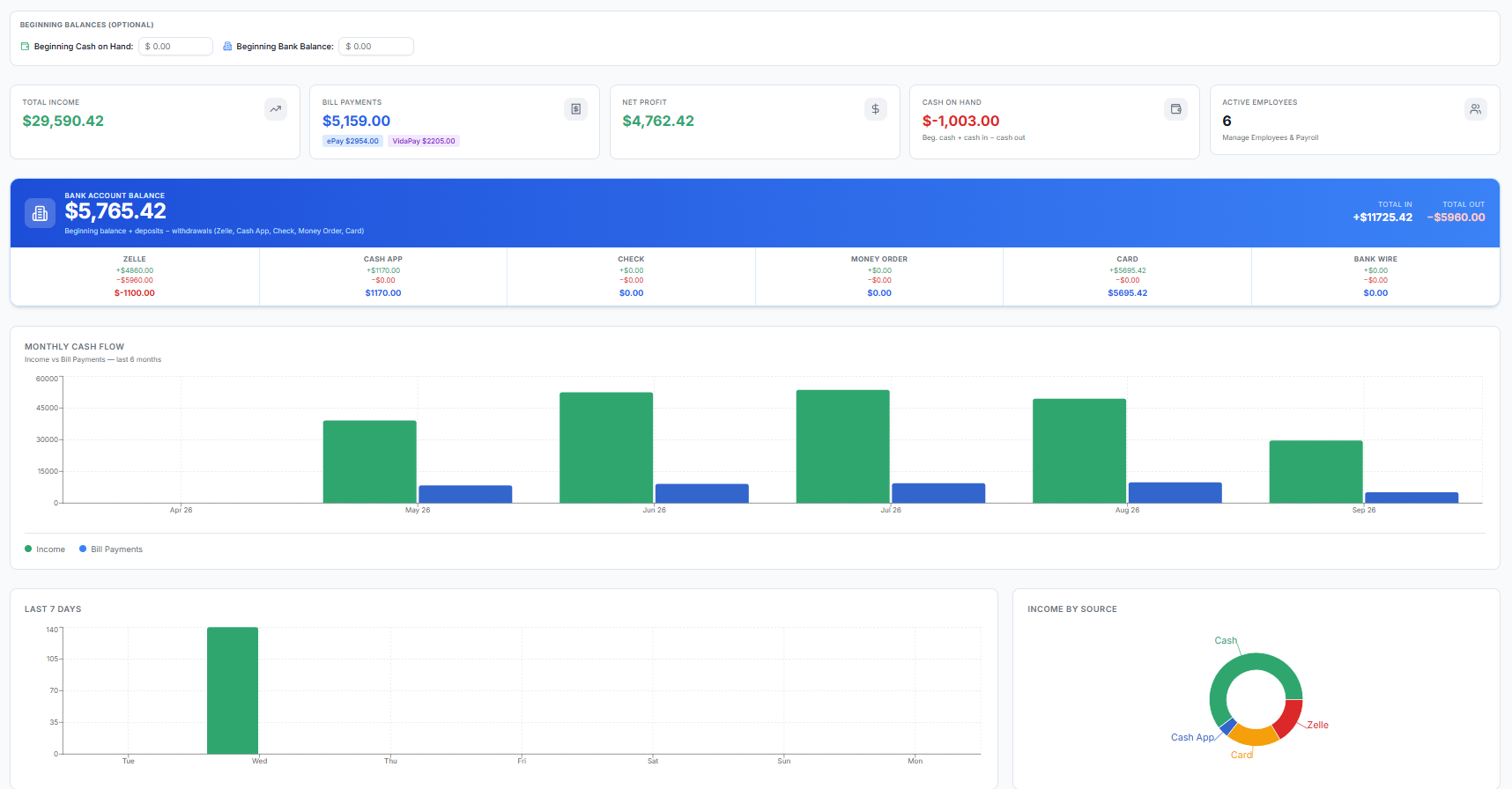
If certain repair types consistently show thin margins, review parts usage in repair-shop-inventory-software to see whether a specific supplier, part grade, or technician is the source of the problem before assuming the service itself is unprofitable. Pulling repair-level data from repair-shop-accounting-software over a few months will usually show which repair categories are actually funding the business and which are breaking even at best.
Diagnostic Fees and Value-Based Pricing
Not every repair fits the cost-plus formula well. A quick diagnostic that takes ten minutes should still carry a fee if the customer declines the repair afterward, since you have already spent technician time and shop capacity on it. Many shops waive the diagnostic fee only when the customer proceeds with the repair, which keeps the fee from feeling punitive while still covering the cost of declined jobs.
For specialized work such as board-level microsoldering or data recovery, cost-plus pricing tends to undervalue the service. These repairs depend on technician skill built over years, not on the few dollars of components involved. Pricing them based on the value of a recovered device or a saved motherboard — rather than parts cost plus a standard margin — is generally a better fit, as long as the price is communicated clearly before work begins.
Frequently asked questions
What is a good profit margin for phone repairs?
There is no single industry-standard figure, since margins depend heavily on local labor rates, parts supplier costs, and rent. Many shops target a margin in the 25–35% range over their break-even price, then adjust up or down based on how consistently they are hitting that target over several months of actual ticket data.
How do I calculate my shop's labor rate?
Add up your total monthly operating expenses — rent, utilities, insurance, software, and technician wages — and divide by your total billable hours in a typical month. That gives you a minimum hourly cost to cover before profit. Add your desired margin on top of that figure to set your actual labor rate.
Should I match my competitor's prices?
Only if you know their cost structure matches yours, which is rarely the case. Use your own break-even price as the starting point, then compare it to the local market for context. If your price is far above competitors, look for inefficiencies in parts cost or labor time before lowering it.
Should I charge for diagnostics even if the customer doesn't repair the device?
Many shops charge a diagnostic fee that is waived if the customer proceeds with the repair, but kept if they decline. This covers the technician time spent assessing the device without penalizing customers who move forward with the work.
How do I account for defective parts in my pricing?
Build a warranty buffer into every repair price, typically 5–10% of the ticket total. Track your actual defect rate over time using your parts and ticket history, and adjust the buffer if replacements are happening more often than the buffer currently covers.
Ready to grow your repair shop?
Manage repairs, POS, inventory and invoicing in one place. Free to try — no credit card required.
Start Your Free Trial